HPCS - 606.325.9990

  • Home
  • About
    • Directions
  • Blog
  • Services
  • Pay Invoice
  • Remote Access
  • Support
    • Email Domain Scanner

Eye-opening Insights from the 2023 Annual Cybersecurity Attitudes and Behaviors Report

April 20, 2024 by Nathan Parks

We are living in an era dominated by digital connectivity. You can’t overstate the importance of cybersecurity. As technology advances, so do the threats that lurk in the online world.

Often, it’s our own actions that leave us most at risk of a cyberattack or online scam. Risky behaviors include weak passwords and lax security policies. As well as thinking “This won’t happen to me.” This is why human error is the cause of approximately 88% of data breaches.

The National Cybersecurity Alliance and CybSafe are working to correct poor cyber hygiene. Each year, the duo publishes a report on cybersecurity attitudes and behaviors. The goal is to educate both people and businesses. To educate them on how to better secure their digital landscapes.

This year’s study surveyed over 6,000 people across the U.S., Canada, the U.K., Germany, France, and New Zealand. The survey asked about several things. These include knowledge of cybersecurity risks, security best practices, and challenges faced.

The report reveals some eye-opening insights. These include how people perceive and respond to cyber threats. As well as what they can do to improve their cybersecurity posture. Here are some of the key findings from the report.

We Are Online… a Lot

It’s no surprise that 93% of the study participants are online daily. The logins we create continue to expand, as well as those considered “sensitive.” Sensitive accounts hold personal information that could be harmful if stolen.

Nearly half (47%) of the study’s respondents have ten or more sensitive online accounts. This amplifies risk. Especially if people are using the same password for two or more of those accounts.
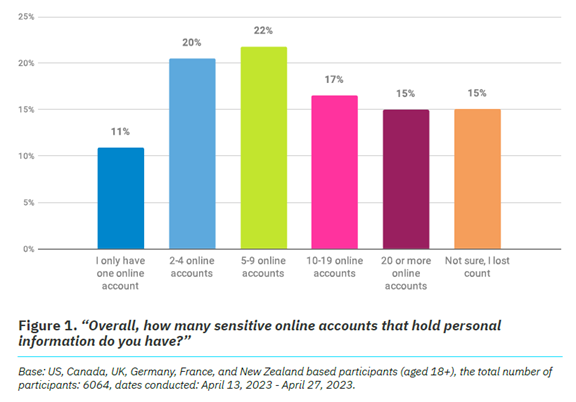
The Annual Cybersecurity Attitudes and Behaviors Report 2023
Source: The Annual Cybersecurity Attitudes and Behaviors Report 2023

Online Security Makes People Frustrated

Most people (84%) feel that online security is a priority. But as many as 39% feel frustrated, and nearly the same amount intimidated. It can seem that you just can’t get ahead of the hackers. Just over half of people thought digital security was under their control. That leaves a whole lot that don’t think so.

But that is no reason to let down your defenses and become an easy target. There are best practices you can put in place to safeguard your online accounts that work.

These include:

  • Enabling multi-factor authentication on your accounts
  • Using an email spam filter to catch phishing emails
  • Adding a DNS filter to block malicious websites
  • Using strong password best practices

People Need More Access to Cybersecurity Training

One way to reduce human errors associated with cybersecurity is to train people. The survey found that just 26% of respondents had access to cybersecurity training.

It also broke this down by employment status. We see that those not actively employed are most lacking. Even those employed can use more training access and encouragement. Just 53% report having access to cybersecurity awareness training and using it.
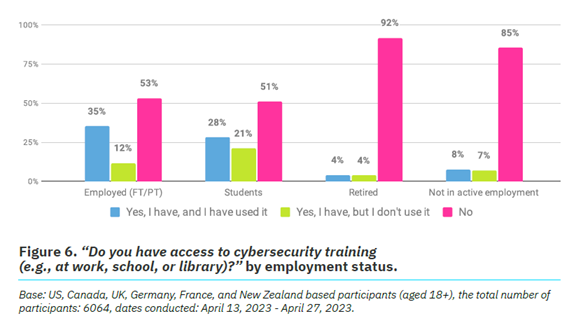
Source: The Annual Cybersecurity Attitudes and Behaviors Report 2023

Employers can significantly reduce their risk of falling victim to a data breach. They can do this by beefing up their security awareness training. There is also a large opportunity to provide more training. Particularly to those retired or not actively employed.

Cybercrime Reporting Is Increasing

Over a quarter (27%) of survey participants said they had been a victim of cybercrime.

The types of cybercrimes reported include:

  • Phishing (47%)
  • Online dating scams (27%)
  • Identity theft (26%)

Which generation reported the most cybercrime incidents? Millennials. In fact, Baby Boomers and the Silent Generation reported the fewest.
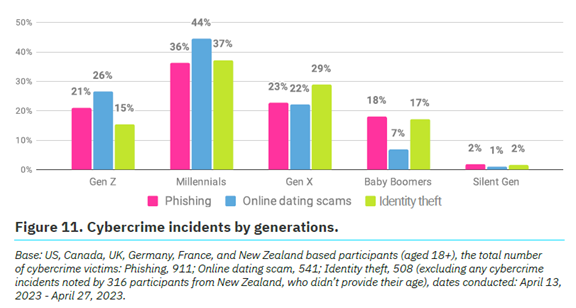
Cybercrime incidents by generations
Source: The Annual Cybersecurity Attitudes and Behaviors Report 2023

No matter where you fall in the generations, it’s important to adopt security best
practices. We’ll go through some of these next.

Online Security Best Practices to Reduce Your Risk

  1. Strong, Unique Passwords:
    • Start with the basics. Create strong, unique passwords for each online account.
    • Use a combination of uppercase and lowercase letters, numbers, and special characters.
  2. Multi-Factor Authentication (MFA):
    • Enhance your account security with multi-factor authentication.
    • MFA adds an extra barrier to unauthorized access. Even for
      compromised passwords.
  3. Regular Software Updates:
    • Keep all your software, including operating systems and mobile
      apps, up to date.
  4. Beware of Phishing Attacks:
    • Exercise caution when clicking on links or opening attachments
      especially in emails from unknown sources.
    • Verify the legitimacy of emails and websites. Check for subtle
      signs, such as misspelled URLs or unfamiliar sender addresses.
  5. Use Secure Wi-Fi Networks:
    • Ensure you connect to a secure and password-protected Wi-Fi
      network.
    • Avoid using public Wi-Fi for sensitive transactions. Unless using a virtual private network (VPN).
  6. Data Backup:
    • Regularly back up important data to an external device or a secure
      cloud service.
  7. Use Antivirus and Anti-Malware Software:
    • Install reputable antivirus and anti-malware software on all devices.
    • Regularly scan your systems for potential threats.
  8. Be Mindful of Social Media Settings:
    • Review and adjust your privacy settings on social media platforms.
    • Limit the amount of personal information visible to the public.
  9. Secure Your Personal Devices:
    • Lock your devices with strong passwords or biometric
      authentication.
  10. Educate and Stay Informed:
    • Educate yourself and your team through cybersecurity awareness
      programs. This fosters a culture of vigilance and preparedness.

Schedule Cybersecurity Awareness Training Today

A little education on cybersecurity goes a long way toward protecting your data. Our experts can provide security training at the level you need. We’ll help you fortify your defenses against phishing, scams, and cyberattacks.

Contact us today to schedule a chat.

—
Featured Image Credit

This Article has been Republished with Permission from The Technology Press.

Filed Under: Cybersecurity

Be Careful When Scanning QR Codes – There’s a New Scam Going Around!

April 15, 2024 by Nathan Parks

QR codes are everywhere these days. You can find them on restaurant menus, flyers, and posters. They’re used both offline and online. QR codes are convenient and easy to use. You just scan them with your smartphone camera. You’re then directed to a link, a coupon, a video, or some other online content.

With the rise in popularity of QR codes comes an unfortunate dark side. Cybercriminals are exploiting this technology for nefarious purposes. Scammers create fake QR codes. They can steal your personal information. They can also infect your device with malware or trick you into paying money.

It’s crucial to exercise caution when scanning QR codes. This emerging scam highlights the potential dangers lurking behind those seemingly innocent squares.

QR Code scan
Image source: Adobe Stock

The QR Code Resurgence

QR codes were originally designed for tracking parts in the automotive industry. They have experienced a renaissance in recent years. As a result, they’re used as a form of marketing today.

They offer the convenience of instant access to information. You simply scan a code. They’ve become an integral part of various industries, including retail and hospitality.

Unfortunately, cybercriminals are quick to adapt. A new phishing scam has emerged, exploiting the trust we place in QR codes.

How the Scam Works

The scammer prints out a fake QR code. They place it over a legitimate one. For example, they might stick it on a poster that advertises a product discount or a movie.

You come along and scan the fake QR code, thinking it’s legitimate. The fake code may direct you to a phishing website. These sites may ask you to enter sensitive data. Such as your credit card details, login credentials, or other
personal information.

Or scanning the QR code may prompt you to download a malicious app. One that contains malware that can do one or more of the following:

  • Spy on your activity
  • Access your copy/paste history
  • Access your contacts
  • Lock your device until you pay a ransom

The code could also direct you to a payment page. A page that charges you a fee for something supposedly free.

Here are some tactics to watch out for.

Malicious Codes Concealed

Cybercriminals tamper with legitimate QR codes. They often add a fake QR code sticker over a real one. They embed malicious content or redirect users to fraudulent websites.

Fake Promotions and Contests

Scammers often use QR codes to lure users into fake promotions or contests. When users scan the code, it may direct them to a counterfeit website. The website may prompt them to provide personal information. This can lead to potential identity theft or financial fraud.

Malware Distribution

Some malicious QR codes start downloads of malware onto the user’s device. This can result in compromised security. Including unauthorized access to personal data and potential damage to the device’s functionality.

Stay Vigilant: Tips for Safe QR Code Scanning

Verify the Source

Be cautious when scanning QR codes from unknown or untrusted sources. Verify the legitimacy of the code and its source. This is especially true if it prompts you to enter personal information.

Use a QR Code Scanner App

Consider using a dedicated QR code scanner app. Use that rather than the default camera app on your device. Some third-party apps provide extra security features. Such as code analysis and website reputation checks.

Inspect the URL Before Clicking

Before visiting a website prompted by a QR code, review the URL. Ensure it matches the legitimate website of the organization it claims to represent.

Avoid Scanning Suspicious Codes

Trust your instincts. If a QR code looks suspicious, refrain from scanning it. Scammers often rely on users’ curiosity. Be careful when scanning QR codes that you see in public places. Don’t scan them if they look suspicious, damaged, or tampered with. Exercising caution is paramount.

Update Your Device and Apps

Keep your device’s operating system and QR code scanning apps up to date. Regular updates often include security patches that protect against known vulnerabilities.

Be Wary of Websites Accessed via QR Code

Don’t enter any personal information on a website that you accessed through a QR code. This includes things like your address, credit card details, login information, etc.

Don’t pay any money or make any donations through a QR code. Only use trusted and secure payment methods.

Contact Us About Phishing Resistant Security Solutions

QR codes can be useful and fun. But they can also be dangerous if you’re not careful. Always scan them with caution. Protect yourself from scammers who want to take advantage of your curiosity.

This scam falls under the umbrella of phishing. Phishing is one of the most dangerous modern risks for individuals and organizations. If you need help ensuring your devices are phishing resistant, just let us know.

Contact us today to learn more.

—
Featured Image Credit

This Article has been Republished with Permission from The Technology Press.

Filed Under: Cybersecurity

9 Signs That Your Smart Home Device Has Been Hacked

April 10, 2024 by Nathan Parks

Smart home devices are becoming more popular and convenient. But they also pose some serious security risks. Hackers can target these devices to access your personal information. As well as spy on your activities or cause damage to your home.

Often the dangers of smart home devices fall under the radar. Seventy-five percent of people feel some level of distrust about the use of their data. Yet most people are willing to use smart home technology.

As we enjoy the convenience of smart living, it’s crucial to be vigilant about cyber threats. A hacker may have compromised your smart system without you even knowing it.

How can you tell if a hacker has compromised your smart home device? Here are some signs to look out for.

1. Unexpected Behavior

Unexpected behavior is the first sign someone has compromised your smart home device. If your device starts acting erratically, it’s time to investigate. Erratic behavior can include:

  • Lights flickering
  • Thermostat settings changing
  • Smart locks behaving unpredictably

Hackers often manipulate smart devices to create disturbances. Noticing these irregularities early can prevent further damage.

2. Unusual Network Traffic

Monitoring your home network is a fundamental aspect of cybersecurity. Have you observed a sudden surge in data usage? Noticed unusual patterns in network traffic? If so, this could indicate unauthorized access.

Hackers may exploit your smart devices to launch attacks or steal sensitive information. Regularly check your router’s activity logs. This helps you stay vigilant against abnormal network behavior.

3. Strange Sounds or Voices

Smart speakers and voice-activated assistants have become commonplace in many households. If you start hearing unfamiliar voices or strange sounds from these devices, it’s a red flag.

Hackers may use compromised devices to eavesdrop or communicate with household members. This poses serious privacy concerns. Ensure that your smart devices are only responding to authorized voices.

4. Device Settings Modification

Smart devices offer customizable settings to cater to individual preferences. Have you noticed unauthorized changes to these settings? Such as alterations in camera angles, sensor sensitivity, or device preferences? If so, there’s a high likelihood that a hacker has compromised your device.

Regularly review and update your device settings. This helps you maintain control over your smart home ecosystem.

5. Unexplained Data Transfers

Smart devices often collect and send data to the cloud for analysis or storage. Keep an eye on your device’s data usage. Be wary of unexplained data transfers. Hackers may exploit vulnerabilities to extract sensitive information from your devices.

Regularly review the data usage patterns of your smart devices. This helps you to identify any suspicious activity.

6. Device Inaccessibility

Suddenly finding yourself locked out of your smart home devices could be a sign of hacking. Hackers may change passwords or enable two-factor authentication without your consent. They can take control of your accounts. This renders you unable to access or manage your devices.

Always act promptly to regain control. Secure your accounts if you suspect unauthorized access.

7. New or Unknown Devices on the Network

Regularly review the list of devices connected to your home network. Do you spot unfamiliar or unauthorized devices? If so, it’s a clear sign that someone may have breached your network.

Hackers often connect to your network. They do this to exploit vulnerabilities in smart devices or launch attacks. Secure your network with strong passwords. Also, consider implementing network segmentation for added protection.

8. Frequent Software Glitches

Smart devices receive regular software updates. These updates patch vulnerabilities and enhance security. Have you noticed frequent software glitches? Or has your device failed to update? It could be a sign of interference
by a malicious actor.

Ensure that your smart devices are running the latest firmware. This ensures it has the latest security patches and bug fixes installed.

9. Emails or Messages Confirming Changes You Didn’t Make

Some smart devices send notifications or emails to confirm changes such as changes in settings, passwords, or device access. Did you receive such confirmations for actions you didn’t take? If so, this is a clear sign of unauthorized access.

Take immediate action to secure your account. This includes changing passwords and reviewing access permissions.

Need Help Securing Your Smart Home & Peace of Mind?

As our homes become smarter, so must our approach to cybersecurity. The first step in safeguarding your digital domain is recognizing signs. The signs that a hacker has compromised your smart home device.

Remember, smart home devices can make your life easier and more comfortable. But they also need careful maintenance and protection.

Need some guidance? We can help you ensure that your smart home remains a secure haven of innovation. Instead of a vulnerable target for cyber threats.

Contact us today to schedule a smart home security consultation.

—
Featured Image Credit

This Article has been Republished with Permission from The Technology Press.

Filed Under: Cybersecurity

These 7 AI Trends Are Sweeping the Cybersecurity Realm

March 25, 2024 by Nathan Parks

Relentless digital innovation has defined the last few years. The symbiotic relationship between AI and cybersecurity has become pivotal especially when it comes to safeguarding sensitive information and digital assets.

As cyber threats evolve in complexity, AI has emerged as a formidable ally. It empowers organizations with advanced tools and techniques. Helping them to stay one step ahead of malicious actors.

In this exploration, we delve into cutting-edge AI trends. The trends that are reshaping the cybersecurity realm as well as fortifying defenses against an ever-expanding array of cyber threats.

The Rise of AI in Cybersecurity

As cyber threats grow in sophistication, traditional measures face challenges in keeping pace. This is where AI steps in. It offers a dynamic and adaptive approach to cybersecurity.

Machine learning algorithms, neural networks, and other AI technologies analyze vast datasets. They do this at unprecedented speeds. They identify patterns and anomalies that might elude human detection.

58% of security professionals expect a completely new set of cyber risks in the coming years.

The integration of AI in cybersecurity doesn’t replace human expertise. It enhances it. This allows security professionals to focus on strategic decision-making. All while AI handles the heavy lifting of data analysis and threat detection.

AI Trends Sweeping the Cybersecurity Realm

1. Predictive Threat Intelligence

AI is revolutionizing threat intelligence by enabling predictive capabilities. Machine learning algorithms analyze historical data, current threats, and emerging patterns. It does this to predict potential future cyber threats. This proactive approach allows organizations to put in place preemptive measures as well as close vulnerabilities before hackers exploit them.

2. Behavioral Analytics

Traditional signature-based approaches struggle to keep up with zero-day attacks as well as advanced “smart phishing.” But AI-driven behavioral analytics take a different approach. They focus on understanding the normal behavior of systems and users. Deviations from these patterns trigger alerts. This helps in identifying potential threats. Identification is based on anomalous activities rather than known signatures.

3. Autonomous Security Systems

The concept of autonomous security systems, empowered by AI, is gaining prominence. These systems can automatically detect, analyze, and respond to cyber threats in real-time. This minimizes response times and reduces the impact of security incidents. The ability to automate routine security tasks enhances efficiency. It also allows human experts to focus on strategic aspects of cybersecurity.

4. Explainable AI (XAI)

AI plays an increasingly critical role in cybersecurity decision-making. This makes the need for transparency paramount. Explainable AI (XAI) addresses this concern. It provides insights into how AI algorithms reach specific conclusions. This enhances trust in AI-driven cybersecurity. It also helps security professionals understand the decisions made by AI systems.

5. Cloud Security Augmentation

With the proliferation of cloud services, securing cloud environments has become a priority. AI is being leveraged to enhance cloud security. A few ways that it does this is by:

  • Monitoring activities
  • Detecting anomalies
  • Responding to threats in cloud-based infrastructures

The dynamic nature of cloud environments requires adaptive security measures. This makes AI a natural fit for bolstering cloud security.

6. Deception Technology

Deception technology involves creating decoy assets within an organization’s network to mislead attackers. Companies are now integrating AI into deception technology to make decoys more convincing as well as more responsive to attackers’ behavior. This helps in early threat detection. It also provides valuable insights into attacker tactics and techniques.

7. Zero Trust Architecture

Zero Trust Architecture, supported by AI, challenges the traditional security model. Where systems trust entities inside and distrust entities outside the network. AI-driven continuous authentication and monitoring ensure that trust is never assumed. It dynamically adapts access privileges. It does this based on real-time assessments of user behavior and risk factors.

Embracing the Future of Cybersecurity with AI

As the threat landscape evolves, the incorporation of AI in cybersecurity is important. It’s not just a strategic choice, it’s a necessity. These AI trends mark a paradigm shift. They are enabling organizations to build more resilient and adaptive cybersecurity frameworks.

It’s important to stay informed and embrace the transformative power of AI. This helps businesses navigate the complexities of the digital landscape. And do it with confidence, fortifying defenses against emerging threats.

AI stands as a beacon of innovation. It continually pushes the boundaries of what’s possible in the realm of cybersecurity. The symbiotic relationship between human expertise and AI-driven capabilities is vital. It will shape the future of data security. Helping ensure a safer digital landscape for businesses and individuals alike.

Schedule a Cybersecurity Upgrade Assessment

How strong are your digital defenses against sophisticated threats? The bad guys are also using AI. This means more dangerous phishing and network attacks. Need some help assessing your strength?

Sign up for a cybersecurity assessment and shed light on your capabilities. We can help you incorporate AI-based protection and fortify your network from attacks.

Give us a call today to schedule a chat.

—
Featured Image Credit

This Article has been Republished with Permission from The Technology Press.

Filed Under: Cybersecurity

Online Security: Addressing the Dangers of Browser Extensions

March 20, 2024 by Nathan Parks

Browser extensions have become as common as mobile apps. People tend to download many and use few. There are over 176,000 browser extensions available on Google Chrome alone. These extensions offer users extra functionalities and customization options.

While browser extensions enhance the browsing experience, they also pose a danger which can mean significant risks to online security and privacy.

In this article, we unravel the dangers associated with browser extensions. We’ll shed light on the potential threats they pose as well as provide insights into safeguarding your online presence.

The Allure and Perils of Browser Extensions

Browser extensions are often hailed for their convenience and versatility. They are modules that users can add to their web browsers. They extend functionality and add customizable elements.

From ad blockers and password managers to productivity tools, the variety is vast. But the ease with which users can install these extensions is a weakness because it also introduces inherent security risks.

Next, we’ll delve into the hazards associated with browser extensions. It is imperative to strike a balance between the benefits and dangers.

Key Risks Posed by Browser Extensions

Privacy Intrusions

Many browser extensions request broad permissions. If abused, they can compromise user privacy. Some of these include accessing browsing history and monitoring keystrokes. Certain extensions may overstep their intended functionality. This can lead to the unauthorized collection of sensitive information.

Users often grant permissions without thoroughly reviewing them. This causes them to unintentionally expose personal data to potential misuse.

Malicious Intent

There are many extensions developed with genuine intentions. But some extensions harbor malicious code. This code can exploit users for financial gain or other malicious purposes. These rogue extensions may inject unwanted ads. As well as track user activities or even deliver malware.

These extensions often use deceptive practices. They make it challenging for users to distinguish between legitimate and malicious software.

Outdated or Abandoned Extensions

Extensions that are no longer maintained or updated pose a significant security risk. Outdated extensions may have unresolved vulnerabilities. Hackers can exploit them to gain access to a user’s browser as well as potentially compromising their entire system. Without regular updates and security patches, these extensions become a liability.

Phishing and Social Engineering

Some malicious extensions engage in phishing attacks as well as social engineering tactics. These attacks can trick users into divulging sensitive information.

This can include creating fake login pages or mimicking popular websites. These tactics lead unsuspecting users to unknowingly provide data. Sensitive data, like usernames, passwords, or other confidential details.

Browser Performance Impact

Certain extensions can significantly impact browser performance. This can happen due to being poorly coded or laden with unnecessary features. This results in a subpar user experience. It can also lead to system slowdowns, crashes, or freezing. An extension’s perceived benefits may attract users but they end up unwittingly sacrificing performance.

Mitigating the Risks: Best Practices for Browser Extension Security

1. Stick to Official Marketplaces

Download extensions only from official browser marketplaces such as those connected with the browser developer (Google, Microsoft, etc.). These platforms have stringent security measures in place. This reduces the likelihood of encountering malicious software.

2. Review Permissions Carefully

Before installing any extension, carefully review the permissions it requests. Be cautious if an extension seeks access to unusual data such as data that seems unrelated to its core functionality. Limit permissions to only what is essential for the extension’s intended purpose.

3. Keep Extensions Updated

Regularly update your browser extensions. This ensures you have the latest security patches. Developers release updates to address vulnerabilities and enhance security. If an extension is no longer receiving updates, consider finding an alternative.

4. Limit the Number of Extensions

It’s tempting to install several extensions for various functionalities. But each added extension increases the potential attack surface. Only install extensions that are genuinely needed. Regularly review and uninstall those that are no longer in use.

5. Use Security Software

Use reputable antivirus and anti-malware software. This adds an extra layer of protection against malicious extensions. These tools can detect and remove threats that may bypass browser security.

6. Educate Yourself

Stay informed about the potential risks associated with browser extensions. Understand the permissions you grant. Be aware of the types of threats that can arise from malicious software. Education is a powerful tool in mitigating security risks.

7. Report Suspicious Extensions

If you encounter a suspicious extension, report it. You should report it to the official browser extension marketplace and your IT team. This proactive step helps browser developers take prompt action. That action protects users from potential threats.

8. Regularly Audit Your Extensions

Conduct regular audits of the extensions installed on your browser. Remove any that are unnecessary or pose potential security risks. Maintain a lean and secure browsing environment. This is a key aspect of online security.

Contact Us for Help with Online Cybersecurity

Browser extensions are just one way you or your employees can put a network at risk. Online security is multi-layered. It includes protections from phishing, endpoint threats, and more.

Don’t stay in the dark about your defenses. We can assess your cybersecurity measures and provide proactive steps for better protection.

Give us a call today to schedule a chat.

—
Featured Image Credit

This Article has been Republished with Permission from The Technology Press.

Filed Under: Cybersecurity

Gamers Beware! Hackers are Targeting You.

February 20, 2024 by Nathan Parks

Gamers haven’t really been the focus of cybersecurity for a long time. You mostly hear about attacks on businesses. Or stolen personal data due to phishing attacks. But gamers are not safe from hackers targeting them.

As cyberattacks continue to escalate, gamers have become prime hacking targets. Malicious actors seek to exploit vulnerabilities in the digital realm. The gaming industry continues to expand. Also, more users immerse themselves in virtual worlds. As this happens, the risks associated with cyberattacks on gamers are on the rise.

Cyberattacks on young gamers increased by 57% in 2022.

Younger gamers playing games like Minecraft, Roblox, and Fortnite are particularly at risk. They’re also often playing on their parents’ devices. Data that holds the interest of hackers fills these devices.

Next, we’ll delve into the reasons behind the increasing threat landscape. As well as discuss ways for gamers to safeguard themselves against potential threats.

The Gaming Boom and Cybersecurity Concerns

The exponential growth of the gaming industry has brought entertainment to millions. But it has also attracted the attention of cybercriminals looking for lucrative opportunities.

According to an MSN article, cyberattacks on gaming platforms are becoming more prevalent. Hackers are deploying sophisticated techniques to compromise user accounts. As well as stealing sensitive information and disrupting online gaming experiences.

Stolen Credentials and In-Game Items

What’s one of the primary motivations behind these cyberattacks? It’s the prospect of acquiring valuable in-game items. As well as the account’s credentials. Virtual goods, such as rare skins, weapons, or characters, hold real-world value. Hackers exploit weak passwords and security loopholes. This allows them to gain unauthorized access to user accounts. Once they do, they pilfer these coveted items for illicit gains.

Ransom Attacks on Gaming Accounts

Ransom attacks have become increasingly prevalent in the gaming world. In these instances, cybercriminals gain control of a user’s account. They then demand a ransom for its release. Hackers often demand the ransom in untraceable cryptocurrency. Gamers may follow the hacker’s demands. As they do not want to lose a meticulously curated game profile. As well as their progress and achievements.

Disruption of Online Gaming Services

Beyond individual attacks, hackers are now targeting gaming platforms. Their intent is to disrupt online services. They launch DDoS (Distributed Denial of Service) attacks to overwhelm servers. This renders them inaccessible to legitimate users.

This frustrates gamers. But can also have severe financial repercussions for gaming companies. They must grapple with the costs of mitigating these attacks. As well as the potential revenue losses.

Understanding the Motivations of Cybercriminals

Effectively combating the rising tide of cyber threats in gaming takes knowledge. It’s crucial to understand the motivations driving these attacks. Virtual economies within games have created a lucrative market for cybercriminals. Additionally, the anonymity of the gaming community makes gamers attractive targets.

Safeguarding Your Gaming Experience: Tips for Gamers

The cyberattack risks are escalating. Gamers must take proactive steps to protect themselves from potential cyber threats. Parents also need to watch out for younger gamers.

Here are some essential tips to enhance gaming cybersecurity.

Strengthen Your Passwords

What’s one of the simplest yet most effective ways to secure your gaming accounts? It is using strong, unique passwords. Avoid using easily guessable passwords. Incorporate a mix of letters, numbers, and special characters. Regularly updating your passwords adds an extra layer of security.

Enable Multi-factor Authentication (MFA)

Multi-factor Authentication is a powerful tool that adds significantly to security. MFA users verify their identity through a secondary method. Such as a code sent to their mobile device. Enabling 2FA greatly reduces the risk of unauthorized access. Even if a hacker has compromised your password.

Stay Informed and Vigilant

Be aware of the latest cybersecurity threats targeting the gaming community. Stay informed about potential risks. As well as new hacking techniques and security best practices. Additionally, be vigilant when clicking on links or downloading files. Keep your guard up when interacting with unknown users within gaming platforms.

Keep Software and Antivirus Programs Updated

Regularly update your gaming platform, antivirus software, and operating system. This will patch vulnerabilities and protect against known exploits. Cybersecurity is an ongoing process. Staying up to date is crucial in thwarting potential attacks.

Use a Virtual Private Network (VPN)

Consider using a Virtual Private Network (VPN) to encrypt your internet connection. This enhances your privacy. It also adds an extra layer of protection against potential DDoS attacks. As well as other malicious activities.

Need Help with Home Cybersecurity?

The gaming landscape continues to flourish. This emphasizes the need for heightened cybersecurity awareness. Many types of home devices need protection. We can help.

Don’t leave your personal or business data at risk. We can help you with affordable options for home cybersecurity. Give us a call today to schedule a chat.

—
Featured Image Credit

This Article has been Republished with Permission from The Technology Press.

Filed Under: Cybersecurity

Need to Show the Tangible Value of Cybersecurity? Here’s How

February 10, 2024 by Nathan Parks

You cannot overstate the importance of cybersecurity. Especially in an era dominated by digital advancements. Businesses and organizations are increasingly reliant on technology to drive operations. This makes them more susceptible to cyber threats.

66% of small businesses are concerned about cybersecurity risk. Forty-seven percent lack the understanding to protect themselves. This leaves them vulnerable to the high cost of an attack.

Conveying the tangible value of cybersecurity initiatives to decision-makers can be challenging. The need for protection is clear, but executives want hard data to back up spending.

We’ll explore strategies to effectively show the concrete benefits of cybersecurity measures. These can help you make the case for stronger measures at your company. As well as help you understand how your investments return value.

How to Show the Monetary Benefits of Cybersecurity Measures

Why does demonstrating the monetary value of digital security measures pose a challenge? The benefits of cybersecurity are often indirect and preventive in nature. This differs from tangible assets with direct revenue-generating capabilities.

Investments in robust cybersecurity protocols and technologies are akin to insurance policies. They aim to mitigate potential risks rather than generate immediate financial returns. Quantifying the exact monetary value of avoided breaches or data loss can be elusive. These potential costs are hypothetical. They’re also contingent on the success of the cybersecurity measures in place.

Additionally, success is often measured by incidents that do not occur. This complicates efforts to attribute a clear monetary value. As a result, companies grapple with finding certain metrics. Ones that effectively communicate this economic impact.

Below are several ways to translate successful cybersecurity measures into tangible value.

1. Quantifying Risk Reduction

What’s one of the most compelling ways to showcase the value of cybersecurity? It’s by quantifying the risk reduction. Companies design cybersecurity initiatives to mitigate potential threats. By analyzing historical data and threat intelligence, organizations can provide concrete evidence. Evidence of how these measures have reduced the likelihood and impact of incidents.

2. Measuring Incident Response Time

The ability to respond swiftly to a cyber incident is crucial in minimizing damage. Metrics that highlight incident response time can serve as a key indicator. They can illustrate the effectiveness of cybersecurity efforts.

It’s also possible to estimate downtime costs. And then correlate those to a reduction in the time it takes to detect and respond to a security incident. This demonstrates potential savings based on faster response.

The average cost of downtime according to Pingdom is as follows:

  • Up to $427 per minute (Small Business)
  • Up to $16,000 per minute (Large Business)

3. Financial Impact Analysis

Cybersecurity incidents can have significant financial implications. Businesses can quantify the potential losses averted due to cybersecurity measures. Businesses do this by conducting a thorough financial impact analysis.

This can include costs associated:

  • Downtime
  • Data breaches
  • Legal consequences
  • Reputational damage

4. Monitoring Compliance Metrics

Many industries have regulatory requirements for data protection and cybersecurity. Demonstrating compliance with these regulations avoids legal consequences. It also showcases a commitment to safeguarding sensitive information. Track and report on compliance metrics. This can be another tangible way to exhibit the value of cybersecurity initiatives.

5. Employee Training Effectiveness

Human error remains a significant factor in cybersecurity incidents. Use metrics related to the effectiveness of employee training programs. This can shed light on how well the company has prepared its workforce. Prepared it to recognize and respond to potential threats. A well-trained workforce contributes directly to the company’s cybersecurity defenses.

6. User Awareness Metrics

Beyond training effectiveness, there are user awareness metrics. These gauge how well employees understand and adhere to cybersecurity policies. Use metrics such as the number of reported phishing attempts. As well as password changes and adherence to security protocols. These metrics provide insights into the human element of cybersecurity.

7. Technology ROI

Investing in advanced cybersecurity technologies is a common practice. Showcasing the return on investment (ROI) can be a powerful way to show value. Use metrics that assess the effectiveness of security technologies. Specifically, in preventing or mitigating incidents. Such as the number of blocked threats. This can highlight the tangible benefits.

8. Data Protection Metrics

For organizations handling sensitive data, metrics related to data protection are paramount. This includes monitoring the number of data breaches prevented. As well as data loss incidents and the efficacy of encryption measures. Show a strong track record in protecting sensitive information. This adds tangible value to cybersecurity initiatives.

9. Vendor Risk Management Metrics

Many organizations rely on third-party vendors for various services. Assessing and managing the cybersecurity risks associated with these vendors is crucial. Metrics related to vendor risk management showcase a comprehensive approach to cybersecurity. Such as the number of security assessments conducted. Or improvements in vendor security postures.

Schedule a Cybersecurity Assessment Today

Demonstrating the tangible value of cybersecurity starts with an assessment. One that uncovers the status of your current security measures. Knowledge is power when fostering a culture of security and resilience.

Give us a call today to schedule a chat.

—
Featured Image Credit

This Article has been Republished with Permission from The Technology Press.

Filed Under: Cybersecurity

Top Data Breaches of 2023: Numbers Hit an All-Time High

February 5, 2024 by Nathan Parks

The battle against cyber threats is an ongoing challenge. Unfortunately, 2023 has proven to be a watershed year for data breaches. Data compromises have surged to an all-time high in the U.S. This is based on data from the first 9 months of the year. Meaning that numbers will only end up higher for the year.

The last data breach record was set in 2021. That year, 1,862 organizations reported data compromises. Through September of 2023, that number was already over 2,100.

In Q3 of 2023, the top data compromises were:

  • HCA Healthcare
  • Maximus
  • The Freecycle Network
  • IBM Consulting
  • CareSource
  • Duolingo
  • Tampa General Hospital
  • PH Tech

This data underscores the relentless efforts of cybercriminals to exploit vulnerabilities. As well as access sensitive information. Let’s take a look at the main drivers of this increase. And the urgent need for enhanced cybersecurity measures.

1. The Size of the Surge

The numbers are staggering. Data breaches in 2023 have reached unprecedented levels. They’ve increased significantly compared to previous years. The scale and frequency of these incidents is concerning. They emphasize the evolving sophistication of cyber threats. As well as the challenges organizations face in safeguarding their digital assets.

2. Healthcare Sector Under Siege

One of the most disturbing trends is the escalating number of breaches in healthcare. Healthcare organizations are the custodians of highly sensitive patient information. As a result, they’ve become prime targets for cybercriminals. The breaches jeopardize patient privacy. They also pose serious risks to the integrity of medical records. This creates a ripple effect that can have long-lasting consequences.

3. Ransomware Reigns Supreme

Ransomware attacks continue to dominate the cybersecurity landscape. Cybercriminals are not merely after data. They are wielding the threat of encrypting valuable information. Then demanding ransom payments for its release. The sophistication of ransomware attacks has increased. Threat actors are employing advanced tactics to infiltrate networks and encrypt data. They are also using many different methods to extort organizations for financial gain.

4. Supply Chain Vulnerabilities Exposed

Modern business ecosystems have an interconnected nature. This has made supply chains a focal point for cyberattacks. The compromise of a single entity within the supply chain can have cascading effects. It can impact several organizations downstream. Cybercriminals are exploiting these interdependencies. They use vulnerabilities to gain unauthorized access to a network of interconnected businesses.

5. Emergence of Insider Threats

External threats remain a significant concern. But the rise of insider threats is adding a layer of complexity. It’s added to the already complex cybersecurity landscape. Insiders inadvertently contribute to data breaches. Whether through malicious intent or unwitting negligence. Organizations are now grappling with a challenge. They need to distinguish between legitimate user activities and potential insider threats.

6. IoT Devices as Entry Points

The proliferation of Internet of Things (IoT) devices has expanded the attack surface. There’s been an uptick in data breaches originating from compromised IoT devices. These connected endpoints range from smart home devices to industrial sensors. They are often inadequately secured. This provides cyber criminals with entry points to exploit vulnerabilities within networks.

7. Critical Infrastructure in the Crosshairs

Critical infrastructure has become a target of choice for cyber attackers. This includes energy grids, water supplies, and transportation systems. The potential consequences of a successful breach in these sectors are often financial. But that’s not all. They can also extend to public safety and national security. As cyber threats evolve, safeguarding critical infrastructure has become an urgent imperative.

8. The Role of Nation-State Actors

Geopolitical tensions have spilled into the digital realm. Nation-state actors are increasingly playing a role in sophisticated cyber campaigns. These actors are often driven by political motives. They use advanced techniques to compromise sensitive data and disrupt operations. This is to advance their strategic interests in the global cyber landscape.

9. The Need for a Paradigm Shift in Cybersecurity

The surge in data breaches underscores the need to rethink cybersecurity strategies. It’s no longer a question of if an organization will be targeted but when. Proactive measures include:

  • Robust cybersecurity frameworks
  • Continuous monitoring
  • A culture of cyber awareness

These are essential for mitigating the risks posed by evolving cyber threats.

10. Collaboration and Information Sharing

Collaboration among organizations and information sharing within the cybersecurity community are critical. Especially as cyber threats become more sophisticated. Threat intelligence sharing enables a collective defense against common adversaries. This allows organizations to proactively fortify their defenses. They do this based on insights gained from the broader cybersecurity landscape.

Protect Your Business from Devastating Data Breaches

The surge in data breaches in 2023 serves as a stark reminder. It reminds us of the evolving and pervasive nature of cyber threats. There is an urgent need for heightened cybersecurity awareness and robust defensive measures. As well as a commitment to adapt to the ever-changing tactics of cybercriminals.

Need help protecting your business? Give us a call today to schedule a chat.

—
Featured Image Credit

This Article has been Republished with Permission from The Technology Press.

Filed Under: Cybersecurity

How Could Your Business Be Impacted by the New SEC Cybersecurity Requirements?

January 31, 2024 by Nathan Parks

Cybersecurity has become paramount for businesses across the globe. As technology advances, so do the threats. Recognizing this, the U.S. Securities and Exchange Commission (SEC) has introduced new rules. They revolve around cybersecurity. These new requirements are set to significantly impact businesses.

These rules are a response to the growing sophistication of cyber threats. As well as the need for companies to safeguard their sensitive information.

Let’s delve into the key aspects of these new SEC regulations. We’ll review what they are and discuss how they may affect your business.

Understanding the New SEC Cybersecurity Requirements

The SEC’s new cybersecurity rules emphasize the importance of proactive cybersecurity measures. These are for businesses operating in the digital landscape. One of the central requirements is the timely reporting of cybersecurity incidents. The other is the disclosure of comprehensive cybersecurity programs.

The rules impact U.S. registered companies. As well as foreign private issuers registered with the SEC.

Reporting of Cybersecurity Incidents

The first rule is the disclosure of cybersecurity incidents deemed to be “material.” Companies disclose these on a new item 1.05 of Form 8-K.

Companies have a time limit for disclosure. This is within four days of the determination that an incident is material. The company should disclose the nature, scope, and timing of the impact. It also must include the material impact of the breach. One exception to the rule is where disclosure poses a national safety or security risk.

Disclosure of Cybersecurity Protocols

This rule requires extra information that companies must report. They report this on their annual Form 10-K filing.

The extra information companies must disclose includes:

  • Their processes for assessing, identifying, and managing material risks from cybersecurity threats.
  • Risks from cyber threats that have or are likely to materially affect the company
  • The board of directors’ oversight of cybersecurity risks
  • Management’s role and expertise in assessing and managing cybersecurity threats.

Potential Impact on Your Business

Is your business subject to these new SEC cybersecurity requirements? If it is, then it may be time for another cybersecurity assessment. Penetration tests and cybersecurity assessments identify gaps in your protocols. They help companies reduce the risk of cyber incidents and compliance failures.

Here are some of the potential areas of impact on businesses from these new SEC rules.

  1. Increased Compliance Burden

Businesses will now face an increased compliance burden. This is as they work to align their cybersecurity policies with the new SEC requirements. This might cause a significant overhaul of existing practices, policies, and technologies. Ensuring compliance will likely mean a large amount of time and resources. This impacts both large corporations and smaller businesses

  1. Focus on Incident Response

The new regulations underscore the importance of incident response plans. Businesses will need to invest in robust protocols. These are protocols to detect, respond to, and recover from cybersecurity incidents promptly. This includes having clear procedures for notifying regulatory authorities, customers, and stakeholders. This would be a notification in the event of a data breach.

  1. Heightened Emphasis on Vendor Management

Companies often rely on third-party vendors for various services. The SEC’s new rules emphasize the need for businesses to assess vendor practices. Meaning, how vendors handle cybersecurity. This shift in focus necessitates a comprehensive review. That review should be of existing vendor relationships. It may mean finding more secure alternatives.

  1. Impact on Investor Confidence

Cybersecurity breaches can erode investor confidence and damage a company’s reputation. With the SEC’s spotlight on cybersecurity, investors are likely to take note. This includes scrutinizing businesses’ security measures more closely. Companies with robust cybersecurity programs may instill greater confidence among investors. This can potentially lead to increased investments and shareholder trust.

  1. Innovation in Cybersecurity Technologies

As businesses strive to meet the new SEC requirements, they will seek innovation. There is bound to be a surge in the demand for advanced cybersecurity solutions. This increased demand could foster a wave of innovation in the cybersecurity sector. This could lead to the development of more effective cyber protection solutions.

The SEC Rules Bring Challenges, but Also Possibilities

The new SEC cybersecurity requirements mark a significant milestone. This is a milestone in the ongoing battle against cyber threats. While these regulations pose challenges, they also present opportunities. The opportunities are for businesses to strengthen their cybersecurity posture. As well as enhancing customer trust, and fostering investor confidence.

By embracing these changes proactively, companies can meet regulatory expectations. They can also fortify their defenses against the ever-evolving landscape of cyber threats. Adapting to these regulations will be crucial in ensuring long-term success. As well as the resilience of your business.

Need Help with Data Security Compliance?

When it comes to ensuring compliance with cybersecurity rules, it’s best to have an IT pro by your side. We know the ins and outs of compliance and can help you meet requirements affordably.

Give us a call today to schedule a chat.

—
Featured Image Credit

This Article has been Republished with Permission from The Technology Press.

Filed Under: Cybersecurity

Beware of These 2024 Emerging Technology Threats

January 20, 2024 by Nathan Parks

The global cost of a data breach last year was USD $4.45 million. This is an increase of 15% over three years. As we step into 2024, it’s crucial to be aware of emerging technology threats. Ones that could potentially disrupt and harm your business.

Technology is evolving at a rapid pace. It’s bringing new opportunities and challenges for businesses and individuals alike. Not all technology is benign. Some innovations can pose serious threats to our digital security, privacy, and safety.

In this article, we’ll highlight some emerging technology threats to be aware of in 2024 and beyond.

Data Poisoning Attacks

Data poisoning involves corrupting datasets used to train AI models. By injecting malicious data, attackers can skew algorithms’ outcomes. This could lead to incorrect decisions in critical sectors like healthcare or finance. Some actions are vital in countering this insidious threat. These include protecting training data integrity and implementing robust validation mechanisms.

Businesses should use AI-generated data cautiously. It should be heavily augmented by human intelligence and data from other sources.

5G Network Vulnerabilities

The widespread adoption of 5G technology introduces new attack surfaces. With an increased number of connected devices, the attack vector broadens. IoT devices, reliant on 5G networks, might become targets for cyberattacks. Securing these devices and implementing strong network protocols is imperative. Especially to prevent large-scale attacks.

Ensure your business has a robust mobile device management strategy. Mobile is taking over much of the workload Organizations should properly track and manage how these devices access business data.

Quantum Computing Vulnerabilities

Quantum computing, the herald of unprecedented computational power, also poses a threat. Its immense processing capabilities could crack currently secure encryption methods. Hackers might exploit this power to access sensitive data. This emphasizes the need for quantum-resistant encryption techniques to safeguard digital information.

Artificial Intelligence (AI) Manipulation

AI, while transformative, can be manipulated. Cybercriminals might exploit AI algorithms to spread misinformation. They are already creating convincing deepfakes and automating phishing attacks. Vigilance is essential as AI-driven threats become more sophisticated. It demands robust detection mechanisms to discern genuine from malicious AI-generated content.

Augmented Reality (AR) and Virtual Reality (VR) Exploits

AR and VR technologies offer immersive experiences. But they also present new vulnerabilities. Cybercriminals might exploit these platforms to deceive users, leading to real-world consequences.

Ensuring the security of AR and VR applications is crucial. Especially to prevent user manipulation and privacy breaches. This is very true in sectors like gaming, education, and healthcare.

Ransomware Evolves

Ransomware attacks have evolved beyond simple data encryption. Threat actors now use double extortion tactics. They steal sensitive data before encrypting files. If victims refuse to pay, hackers leak or sell this data, causing reputational damage.

Some defenses against this evolved ransomware threat include:

  • Robust backup solutions
  • Regular cybersecurity training
  • Proactive threat hunting

Supply Chain Attacks Persist

Supply chain attacks remain a persistent threat. Cybercriminals infiltrate third-party vendors or software providers to compromise larger targets. Strengthening supply chain cybersecurity is critical in preventing cascading cyber incidents. Businesses can do this through rigorous vendor assessments, multi-factor authentication, and continuous monitoring.

Biometric Data Vulnerability

Biometric authentication methods, such as fingerprints or facial recognition, are becoming commonplace. But users can’t change biometric data once compromised, like they can passwords. Protect biometric data through secure encryption. Ensure that service providers follow strict privacy regulations. These are paramount to preventing identity theft and fraud.

Advanced Phishing Attacks

Phishing attacks are one of the oldest and most common forms of cyberattacks. These attacks are becoming more sophisticated and targeted thanks to AI. For example, hackers customize spear phishing attacks to a specific individual or organization. They do this based on online personal or professional information.

Another example is vishing attacks. These use voice calls or voice assistants to impersonate legitimate entities. They convincingly persuade victims to take certain actions.

Ongoing employee phishing training is vital. As well as automated solutions to detect and defend against phishing threats.

Tips for Defending Against These Threats

As technology evolves, so do the threats that we face. Thus, it’s important to be vigilant and proactive. Here are some tips that can help:

  • Educate yourself and others about the latest technology threats.
  • Use strong passwords and multi-factor authentication for all online accounts.
  • Update your software and devices regularly to fix any security vulnerabilities.
  • Avoid clicking on suspicious links or attachments in emails or messages.
  • Verify the identity and legitimacy of any callers or senders. Do this before providing any information or taking any actions.
  • Back up your data regularly to prevent data loss in case of a cyberattack.
  • Invest in a reliable cyber insurance policy. One that covers your specific needs and risks.
  • Report any suspicious or malicious activity to the relevant authorities.

Need Help Ensuring Your Cybersecurity is Ready for 2024?

Last year’s solutions might not be enough to protect against this year’s threats. Don’t leave your security at risk. We can help you with a thorough cybersecurity assessment, so you know where you stand.

Contact us today to schedule a chat.

—
Featured Image Credit

This Article has been Republished with Permission from The Technology Press.

Filed Under: Cybersecurity

  • « Previous Page
  • 1
  • 2
  • 3
  • 4
  • 5
  • 6
  • 7
  • Next Page »

Reviews

High Performance Computer place picture
High Performance Computer
4.5
Based on 26 reviews
powered by Google
review us on
Mary Ann Travis profile picture
Mary Ann Travis
19:18 13 Mar 21
Local and honest
Curtis Bradley profile picture
Curtis Bradley
14:27 13 May 20
Nathan & Joe solved our computer related problem quickly and we were able to submit our application to PNC Bank for the Payroll Protection Program.
CJ profile picture
CJ
16:58 11 Oct 19
I have used HPC's services several times, always with the same result ………………… they fix my problem in a timely manner at a reasonable cost. They are also extremely friendly, and even stayed after closing a few minutes in order for me to get there and pick up my computer.
Great place to do business !!!
paula fletcher profile picture
paula fletcher
19:22 02 Oct 19
The staff at High Performance Computer Services has taken of the IT issues in our office for many years. They are friendly, competent, helpful, and knowledgeable. I have never had to wait for a problem to be addressed. Nathan and his staff are available when I call and diligent in resolving issues. I highly recommend them!
Richard Miranda profile picture
Richard Miranda
16:07 10 Sep 19
Needed help with my Computer and they took care of my problem. Great to work with.
Harry Wiley profile picture
Harry Wiley
23:38 03 Sep 19
Quick, excellent service! The company's representative who came to our home to fix our problem was professional, courteous and an excellent representative of the company.
Jay Kemm profile picture
Jay Kemm
23:03 16 Jun 19
They checked a computer I had and told me the problem. Fair price. Not shady. Will use again if I have issues.
More reviews

Contact Info

Toll Free – 844.300.9990
Ashland, KY – 606.325.9990
Ironton, OH – 740.414.4419
Huntington, WV – 304.521.1579
Fax – 606.393.6114

Business Hours:
9am-5pm Monday through Friday
Closed Holidays

824 Greenup Ave.
PO Box 2112
Ashland, KY 41101
support@HighPCS.com

Call Us
Toll Free – 844.300.9990

Ashland, KY – 606.325.9990

Ironton, OH – 740.414.4419

Huntington, WV – 304.521.1579

Fax – 606.393.6114

Business Hours

Phone Support – 8am-5pm Monday through Friday 
Shop Hours – 9am-5pm Monday through Friday 

* Closed for Company Meeting
Wednesday Afternoon 12-1 – Please Call *
 
Emergency Services Available
support@HighPCS.com


Directions

824 Greenup Ave.
PO Box 2112
Ashland, KY 41101

NinjaCopyright © 2026 · Agency Pro Theme on Genesis Framework · WordPress · Log in