HPCS - 606.325.9990

  • Home
  • About
    • Directions
  • Blog
  • Services
  • Pay Invoice
  • Remote Access
  • Support
    • Email Domain Scanner

Wi-Fi Performance Secrets to Boost Your Business Productivity

September 30, 2025 by Nathan Parks

Nothing disrupts your workday quite like unreliable Wi-Fi. One moment everything’s running smoothly, and the next, video calls freeze, files won’t upload, and the team struggles to meet deadlines because everything’s slowed down. Being stuck in this situation is exhausting, killing productivity, and impacting the entire business.

When slowdowns start happening regularly, frustration quickly builds. But here’s the good news: most businesses don’t need to overhaul their entire system. Usually, just a few smart tweaks to your network can bring your connection back to life.

You don’t need a big IT team to make a real difference. By working with the right IT partners, you can pinpoint what’s slowing down your network, make smart upgrades, and turn your slow Wi-Fi into a fast, reliable system your team can count on every day.

Why Stable Connection Is Essential for Your Business

These days, everything we do at work depends on the internet, including:

  • Video meetings
  • Cloud-based apps
  • Real-time messaging
  • Smart devices like printers or coffee machines

Slow connections are not just an inconvenience; they slow down your entire workflow. A reliable and fast network is no longer a luxury, but the foundation of a productive workplace.

Check These 6 Signs to Know If Your Network Needs Help

Curious about how your network is really performing? These six factors will give you a clear picture:

  • Speed: Can your team upload, download, and stream without delays?
  • Lag: Notice a delay between clicking and things happening? That’s a lag.
  • Dropouts: If your Wi-Fi signal keeps cutting out, that’s a problem.
  • Jitter: On calls, if voices sound garbled or video stutters, jitter is likely to blame.
  • Coverage: Dead zones around the office? You may need more access points.
  • Security: Unknown devices connecting? That’s a red flag for performance and safety.

8 Smart Tips to Boost Your Network’s Performance

If your connection keeps freezing during important client meetings or it takes too long to download apps, it can seriously hurt your business’s revenue and reputation if it goes on.

Here are eight ways to optimize your network performance: 

1. Upgrade Your Hardware

If your router or firewall is several years old, it might be time for an upgrade. Outdated equipment can slow down even the fastest internet plans.

Invest in equipment that can handle today’s demands and grow with you down the line.

2. Give Priority to What Matters Most

Ever notice how streaming Netflix can disrupt your Zoom call? That’s where Quality of Service (QoS) comes in, it prioritizes important traffic like video and phone calls, ensuring they get the bandwidth they need first.

3. Divide Your Networks

Think of it like creating separate lanes to avoid traffic jams. By dividing your network into smaller segments, you reduce congestion and boost security. If one segment goes down, the others keep running, so you can maintain operations. It also helps different departments work efficiently without interfering with each other.

4. Balance Server Load

By balancing server load, you share workload across servers, so nothing gets overloaded. It keeps systems running smoothly during busy times and helps your team stay productive without delays.

5. Adjust Your Setup for Efficiency

Sometimes slow internet is simply a matter of settings. Make sure to regularly check your router, switch, and firewall. Using network monitoring tools can help you quickly identify and fix any problems.

6. Watch for Threats Before They Slow You Down

An Intrusion Detection System (IDS) keeps an eye out for unusual activity that might be slowing down your network. If someone tries to sneak in or overload your system, you’ll catch it early, before it turns into a bigger problem. It quietly works behind the scenes, protecting your system and keeping your connection steady.

7. Build in a Backup Plan

Having a backup internet connection or extra equipment means your team can keep working, even if something goes down. There’s no need to sit around waiting for the internet to come back. It’s a simple, budget-friendly solution that small businesses can put in place easily, keeping you prepared for slowdowns or unexpected issues.

8. Tune Up Your Protocols

Not all businesses use the same kind of internet traffic. If your network protocols are outdated or poorly configured, they can slow everything down. Updating them to better manage data flow can make a significant difference, especially for businesses that rely on real-time data, like customer service, trading, or e-commerce.

Ready for a Real Fix? Call in the Pros 

You’ve got more important things to do than deal with dropped signals or choppy calls, and that’s where we can help.

We’ll make sure your network runs smoothly and stays free from interruptions. Whether you’re managing complex operations or leading a large team, we’ll help you build a Wi-Fi network that’s fast, secure, and reliable.

Here’s what we have to offer:

  • Clean, modern hardware setups
  • Smarter configurations tailored to your needs
  • Proactive security and support
  • Solutions that scale as you grow

We don’t make quick fixes; we do it right. Let us take the pressure off. Contact us today, and we’ll help turn your slow, unreliable network into one your team can count on, so you can stay focused, work faster, and keep things moving forward.

—

Featured Image Credit

This Article has been Republished with Permission from The Technology Press.

Filed Under: Business

Invest Smart, Grow Fast: Your Small Business Guide to IT Expense Planning

September 15, 2025 by Nathan Parks

Without realizing it, technology can drain your business budget. One day, everything seems manageable, and the next, you’re left wondering where all these unexpected costs are coming from. Expenses pile up quickly and become tough to track. Whoever said running a business would be easy?

Here’s the good news: you don’t need to spend thousands on a large in-house IT team or become an IT expert yourself. The best approach is to partner with an IT specialist who can help you manage your IT costs. With their strategic planning and focus, your IT budget will work for you, not against you. This guide is designed to help you better understand IT expense planning.

Strategic Ways to Plan Your Business’s IT Expenses

Step 1: Be Aware of Your Business Expenses

Take some time to figure out what you are paying for and how it will benefit you. Ask yourself:

  • What equipment is your team using daily?
  • How many software tools do you actually use?
  • Are there overlapping features between tools?
  • Are you still being charged for a subscription from 2021?

Sometimes, you do not need to spend a penny and just clean things up. This is why having a good understanding of your business expenses is key.

Step 2: Spend Where It Actually Helps

There’s a difference between spending and investing. Buying gadgets because they’re shiny? That’s spending. Putting money into tools that make your work easier, faster, or safer? That’s investing.

Here’s where you usually get the most bang for your buck:

  • Cybersecurity: A basic firewall or antivirus can protect you from a major breach which is much less expensive than dealing with recovery.
  • Cloud tools: Let your team work from anywhere and save on server headaches.
  • Automation: Let software manage repetitive tasks so that your team saves time.
  • Training: This is crucial because there’s no point in investing in a new tool if your team can’t use it effectively.

Step 3: Give Your Budget a Backbone

Lumping all IT costs into one big bucket makes it hard to tell what’s working and what’s not. Instead, break down your expenses into clear categories such as:

  • Hardware: Laptops, monitors, routers, and all the equipment your business cannot operate without.
  • Software: Every subscription and tool your team relies on.
  • Security: VPNs, password managers, and antivirus software.
  • Support: Who do you call when something breaks?
  • Training: Helping your team learn the tech they’ve got.
  • Backups: Peace of mind because technology can fail.

Now you’re not just budgeting, but building a system you can track and improve.

Step 4: Trim What You Don’t Need

Remember that dusty treadmill in your garage that hasn’t been used since New Year’s? Your IT budget probably has a few forgotten expenses just like that.

Here’s how to clean it up:

  • Cancel unused subscriptions: If no one’s logged in for 3 months, it’s probably safe to let it go.
  • Consolidate tools: One solid platform might replace three mediocre ones.
  • Renegotiate with vendors: A five-minute call could save you hundreds a year.
  • Outsource smartly: Hiring full-time IT staff isn’t always necessary. A managed IT partner can often do more, for less.

This doesn’t mean settling for less, it means getting rid of the things you no longer need.

Step 5: Allow for Flexibility

Your budget should adapt to your needs without breaking under pressure:

  • Keep backups in place for emergencies.
  • Update your budget every quarter.
  • Assess which expenses add value versus those that don’t.

A good IT budget is like a good pair of jeans. It fits now, but stretches a little when you need it .

Step 6: Plan for the Future, Not Just Today

It’s easy to budget just for what’s in front of you, but what happens when you hire two new people or move to a bigger office?

  • Will you need more licenses or storage next quarter?
  • Are you opening a new location?
  • Planning to go remote or hybrid?

If growth is part of your plan, your IT budget should reflect that too.

Step 7: Don’t Do It Alone

You don’t have to be a tech expert when you have one on your side. A great IT partner helps you stay organized, cut unnecessary costs, and keep everything running smoothly. They understand your systems, communicate clearly, and make it easy for you to stay ahead of issues instead of scrambling to fix them. It’s smart, hassle-free support.

Always Budget for a Plan B Just in Case

Things don’t always go as planned. Maybe your internet drops during a big meeting. Maybe a laptop decides today’s the day it won’t turn on. That’s why it’s smart to build in a safety net. A second internet line or a spare device can keep you moving when things get bumpy. It’s like keeping a backup charger in your bag. Most days, you won’t need it. But when you do, you’ll thank yourself. A little prep now can save a lot of panic later.

Smart Budgeting: Make Every Tech Dollar Count

Building a better IT budget isn’t just about slashing costs. It’s more than merely spending less. It’s about knowing where your money goes and making sure it supports your business goals.

When you know which tools truly add value and eliminate the rest, everything runs more smoothly. You create room to grow and build a setup that supports your business instead of holding it back.

Still not sure where to start? We’ll help you streamline your IT expenses, eliminate unnecessary costs, and create a plan aligned with your business goals. IT budgeting doesn’t have to be overwhelming. We’ll make it simple. Contact us today.

—

Featured Image Credit

This Article has been Republished with Permission from The Technology Press.
Filed Under: Business

Data Quality is Your Small Business’s Secret Weapon

September 10, 2025 by Nathan Parks

Nobody builds a house on a weak foundation, so why operate your business based on unreliable data? 

According to research, bad data costs US firms over $3 trillion every year, and roughly 40% of company goals fail as a result of inaccurate information.

Data is everywhere, and if you are not utilizing it to your advantage, you are missing out. It is found in emails, customer profiles, inventory systems, or basically throughout your entire workflow. But relying on outdated or inaccurate information can lead to confusion, slow down your team, and ultimately cost you a lot of money.

Here’s the good news: you don’t need an entire IT department to manage your data effectively. With the right IT partner and a few simple steps, you can keep everything clean and running smoothly.

Why Good Data Is Key

It is challenging to run a small business, and bad data makes things worse. With accurate data, you can make smarter decisions, satisfy customers, and run your operations more efficiently, as a result, boosting sales and benefiting your company without wasting resources.

You might be wondering, isn’t that the same as data integrity? Actually, no. Data integrity focuses on protecting data from leaks or corruption, it’s more about security and ensuring records stay safe and intact.

Data quality means your information is accurate and useful. It helps you make smart decisions, while data integrity protects the data you rely on.

What Makes Data “High Quality”?

It is simple. If your data ticks these boxes, you’re already on the right path: 

1. It’s Accurate

Your data reflects what is going on in the real world. This means it should be free of errors such as spelling mistakes, inaccurate invoices, or old contact information. 

2. It’s Complete

All the pieces are there. No half-filled forms or missing phone numbers. Incomplete data often leads to guesswork, which slows everyone down.

3. It’s Current

Outdated data can be worse than no data at all. Relying on last year’s sales trends to guide this month’s decisions can quickly lead to problems. 

4. It’s Consistent

If a customer’s name is spelled three different ways across your systems, it creates confusion. Clean data looks the same, wherever it lives.

5. It’s Unique

Duplicates skew results. You don’t want “Bob Smith” entered five times with five different emails. One record per person. Simple.

6. It’s Useful

Your data should be just detailed enough to help you, no more, no less. Too much unnecessary information makes it harder to spot what really matters.

What Happens If You Ignore Data Quality?

Let’s say you’re preparing for a big email campaign. If your list is filled with old addresses, spelling mistakes, or duplicate contacts, your open rates tank, and your reputation with email providers suffers.

Or imagine your team keeps delivering orders to the wrong location because the customer’s info hasn’t been updated. That’s time, money, and trust gone.

Here’s the thing: fixing these issues after they happen requires far more effort than preventing them from occurring in the first place.

7 Simple Ways to Keep Your Business Data Clean

1. Decide What Info Actually Matters

Identify the key data that keeps your business running smoothly, like customer contacts, order details, or payment terms. Then, create simple guidelines your team can easily follow. When everyone uses the same format, it keeps things organized without making it complicated.

2. Show Your Team the Right Way to Do It

Most data errors occur when people aren’t sure what’s expected of them. Rather than overwhelming your team with lengthy manuals, provide a simple, clear guide. How should names be formatted? What’s the correct way to enter addresses? A brief, straightforward session without jargon can make a big difference in maintaining consistency.

3. Tidy Things Up Often

Don’t wait too long to clean up your data. A quick monthly review helps you spot duplicates, fix mistakes, and update old info before it creates bigger issues.

4. Use Smart Tools to Prevent Errors 

Some mistakes can be caught the moment they happen. You just need the right tools:

  • Use form validations so emails, dates, and numbers follow the right format.
  • Make certain fields required, like phone numbers or email addresses.
  • If your CRM allows it, set up automatic checks for common errors.

5. Give Your Team a Way to Flag Issues

Your staff are often the first to notice when something’s off. If names are getting mixed up or records are incomplete, they should feel comfortable pointing it out. Create a simple way for them to flag these problems and help fix them before they grow.

6. Keep Your Documentation Updated

Things change fast with new systems, tools, and team members. That’s why it helps to keep a simple note on where your data comes from, who handles it, and how it should be used.

7. Watch a Few Key Metrics

You don’t need to track everything. Just keep an eye on a few key things:

  • Are there a lot of duplicates showing up?
  • Are important fields being left blank?
  • How accurate is your customer info?

Quick checks once a month will help you stay ahead of any issues.

Don’t Let Data Be the Thing Holding You Back

You don’t need a complete system overhaul, just a few smart adjustments. Begin by cleaning up your existing data, setting some simple rules, and reaching out for help when it matters most. That’s where we come in. We help small teams like yours get your data organized without the hassle.

Better data means smoother workdays, clearer decisions, and happier customers. Ready to stop wasting time on messy info? Reach out today and let’s get your data back on track.

—

Featured Image Credit

This Article has been Republished with Permission from The Technology Press.

Filed Under: Business

From Offer Letter to First Login: How IT Makes New Hire Setup Easy

August 20, 2025 by Nathan Parks

There’s nothing worse than walking into a new job and spending your first day filling out forms, asking where the bathroom is, and staring at a screen that still doesn’t have your login credentials. It’s awkward, overwhelming, and not the welcome anyone hopes for.

According to Gallup, only 12% of employees strongly feel that their company performs an excellent job onboarding new employees, indicating a significant opportunity for improvement through better IT solutions.

With the right IT solutions in place, you can turn a chaotic first day into a smooth, professional, and welcoming experience, both for the employee and your HR team.

Why Onboarding Matters

The first 90 days of any new job are critical. According to SHRM, nearly 1 in 3 employees who quit within their first six months of employment said they received little to no onboarding, and 15% specifically cited poor onboarding as a key reason for leaving. That’s not just a talent issue; it’s a cost issue too.

Thankfully, it does not have to be that way. A well-organized onboarding program can boost retention and improve employee engagement. It’s a huge opportunity to make a lasting impression, and IT plays a key role in making it happen.

The Struggle with Traditional Onboarding

The typical onboarding experience? Forms. Password resets. More forms. Confusion. Waiting.

For HR and IT teams, it’s no better. From tracking equipment to setting up accounts, they’re often buried in repetitive tasks that leave little time for human connection.

Here are a few common headaches:

  • Endless paperwork: Wastes time and opens the door to errors.
  • Lack of role clarity: New hires don’t know what’s expected of them.
  • No consistency across teams: Every department does it differently.
  • Tech delays: New employees can’t do their job without access to the right tools.

Fortunately, IT services can tackle every one of these problems and more.

How IT Services Streamline the New Hire Process

Let’s break down how technology can step in and make everything smoother, faster, and more efficient for everyone involved.

1. Start Before Day One with Preboarding

The moment someone accepts your offer, the onboarding process should begin.

Set the tone by sending digital welcome kits, login details, and training schedules. With IT support, you can automate emails, pre-configure accounts, and even ship laptops with the necessary software already installed.

Here’s a preboarding checklist powered by IT:

  • Email setup and access to systems
  • Welcome videos or messages from leadership
  • Digital forms completed and submitted online
  • A clear first-day schedule
  • Slack or Teams invites to meet the team

This gets the boring stuff out of the way so your new hire can hit the ground running.

2. Automate the Repetitive Tasks

Let’s face it, nobody should spend their time manually inputting the same employee data into five different systems.

IT services can automate:

  • Data entry into HR systems
  • Background checks
  • Compliance training assignments
  • Reminder emails for pending tasks

This automation gives HR more time to actually connect with new hires and less time chasing paperwork.

3. Make Training Interactive and Accessible

Forget about dull training binders. Modern learning platforms, powered by IT, allow companies to deliver engaging training through videos, quizzes, simulations, and gamified content.

Even better? A learning management system (LMS) can be tailored for each role, so a marketing associate and a software engineer don’t waste time on irrelevant modules.

IT makes this possible with:

  • Easy integration of LMS tools
  • Device compatibility (mobile, desktop, tablet)
  • Progress tracking and reminders

When new hires learn faster, they contribute faster. It’s that simple.

4. Create One Central Hub for Everything

A unified onboarding portal pulls everything into one place: policies, tools, documents, training modules, schedules, and contacts.

Instead of a dozen scattered emails, employees can access what they need in one click, whether they’re in the office or remote.

IT solutions provide:

  • A single login for all onboarding needs
  • Secure document sharing and storage
  • Mobile-friendly interfaces for convenience

This not only makes onboarding easier, but also shows your company is organized and modern.

5. Use Analytics to Improve Over Time

Want to know how long it takes your hires to become fully productive? Or which training modules are most effective?

IT systems offer dashboards and reports that track:

  • Time-to-productivity
  • Completion rates
  • Satisfaction surveys
  • Drop-off points in onboarding

This data helps you refine the process and prove the value of a solid onboarding strategy.

Making It Personal: Why Customization Matters

Not every new employee needs the same exact path. Some may thrive with self-paced learning, while others prefer scheduled check-ins and mentorship.

IT tools make it easy to customize onboarding based on:

  • Role and department
  • Prior experience
  • Learning preferences

From assigning a mentor on day one to recommending skill-based learning paths, IT can personalize each employee’s journey while keeping the overall process consistent.

The Role of IT in Manager Involvement

Managers are vital to onboarding, but they’re busy too. IT platforms can send timely nudges and provide checklists to help them stay involved without overwhelming them.

Tools can automate:

  • 30/60/90-day check-in reminders
  • Onboarding task assignments
  • Feedback collection and next steps

This keeps everyone on the same page and helps managers guide their new hires without dropping the ball.

IT is the Secret to Better Onboarding

Let’s be real, the first days of a new job are nerve-wracking enough. Nobody wants to spend hours digging through old PDFs or waiting for a password reset.

When IT manages automation, integration, and data tracking, you can focus on what truly counts: human connection, confidence, and clarity.

That’s what truly great onboarding looks like. Whether you’re a growing startup or a large organization, contact us today and improve your onboarding with smarter IT solutions. 

—

Featured Image Credit

This Article has been Republished with Permission from The Technology Press.

Filed Under: Business

7 Great Examples of How AI is Helping Small Businesses

November 30, 2024 by Nathan Parks

Artificial Intelligence is no longer a technology reserved for companies with big budgets. Today, small businesses can access AI tools that help in several ways. Such as streamlining operations, improving customer experiences, and boosting profits. 

The rise of affordable AI solutions has opened the door for small businesses. They can leverage these powerful technologies without spending a fortune. This post will explore seven great examples of how to use AI to succeed in a competitive market.

1. Streamlining Customer Support with AI Chatbots

Small businesses often struggle with limited customer service resources. AI-powered chatbots provide a cost-effective solution. They automate responses to common customer inquiries. And can sound less robotic than non-AI chatbots.

Here are a couple of ways AI chatbots add value to small businesses.

Reducing Response Times

AI chatbots can handle several conversations at once. This significantly reduces customer wait times. Chatbots work 24/7, ensuring support is always available. This removes the burden on human agents. It also customers with quick answers to their questions.

Enhancing Customer Experience

AI chatbots are becoming more sophisticated. They can engage in natural, human-like conversations. Small businesses can offer high-quality service without increasing overhead costs.

2. Improving Marketing with AI-Powered Analytics

Marketing is crucial for small businesses but can be time-consuming and costly. AI-powered analytics tools help businesses make smarter decisions. They provide insights based on customer behavior, preferences, and trends.

Targeted Advertising

AI can analyze customer data to create highly targeted ad campaigns. They help ensure that businesses spend marketing budgets efficiently. This increases return on investment (ROI).

Predicting Customer Trends

AI uses predictive analytics to forecast future trends based on historical data. This enables small businesses to adjust their strategies in real time. With AI, companies can adapt quickly, maximizing their reach and impact.

3. Automating Routine Tasks with AI Tools

Small business owners often juggle many roles. This includes managing inventory and handling customer inquiries. AI can help by automating repetitive, time-consuming tasks.

Scheduling and Calendar Management

AI tools can automate scheduling. This includes client meetings, appointments, or team collaboration. You can integrate AI with email platforms and calendars. This saves time and reduces the risk of human error.

Invoice and Expense Management

Managing finances is another area where AI excels. AI-driven accounting tools can automate invoicing, track expenses, and more. This reduces the administrative burden on small business owners. It also ensures financial data is accurate and up-to-date.

4. Enhancing Inventory Management with AI Forecasting

Managing inventory is a critical aspect of running a small business. Overstocking can lead to increased costs. Understocking results in missed sales opportunities. AI can help balance inventory levels by accurately predicting demand.

Demand Forecasting

AI algorithms analyze historical sales data. As well as seasonality and market trends to predict future demand. This allows small businesses to order the right amount of inventory. This reduces waste and ensures they always have what customers need. 

Automating Reordering

AI can also automate the reordering process. It can set triggers when stock levels reach a certain threshold. This ensures that companies replenish inventory before items run out.

5. Personalizing Customer Interactions with AI

Personalized experiences are key to customer loyalty. AI tools can analyze customer data and provide insights. These insights enable businesses to tailor their interactions, making customers feel valued.

Companies that use personalization can generate as much as 40% more revenue.

Personalized Product Recommendations

AI-powered recommendation engines analyze customer preferences and past purchases. They use these to suggest products that are most likely to appeal to them. This can lead to increased sales and improved customer retention.

Customized Email Marketing

AI can also help businesses create personalized email marketing campaigns. It can segment customers based on their behavior, preferences, and purchasing history. AI tools can then generate tailored email content.

6. Enhancing Recruitment and HR Processes with AI

Hiring the right employees is critical but often a time-consuming process. AI tools can streamline recruitment and human resource (HR) processes. It helps businesses find the right talent more efficiently.

Screening Resumes

AI-driven recruiting tools can quickly scan resumes. This reduces the time spent manually reviewing applications. It allows business owners to focus on interviewing top candidates. 

Predicting Employee Performance

AI can analyze employee data to predict which candidates are likely to succeed. This ensures that new hires are a good fit. It also reduces turnover and improves productivity.

7. Securing Data with AI-Powered Cybersecurity

Cybersecurity is a growing concern for small businesses. They often lack the resources to install robust security measures. AI-powered tools can help protect sensitive data from cyber threats. This ensures the safety of both business and customer information.

Detecting Anomalies

AI can check systems in real-time. It can detect anomalies that show potential security threats. AI tools provide early warnings. This allows businesses to respond quickly and prevent breaches.

Automating Threat Responses

Some AI-powered cybersecurity tools can automatically respond to threats. Such as isolating affected systems or blocking malicious traffic. This reduces the risk of data breaches and minimizes downtime.

Streamline AI Integration for Your Business Success

Now is the time to explore how AI can help your company succeed. Our business technology experts can help.


Reach out today to schedule a chat about leveraging AI to improve your bottom line.

—

Featured Image Credit

This Article has been Republished with Permission from The Technology Press.

Filed Under: Business

Smart Tactics to Reduce Cloud Waste at Your Business

April 25, 2024 by Nathan Parks

Cloud computing has revolutionized the way businesses operate. It offers scalability, flexibility, and cost-efficiency. But cloud services also come with a downside: cloud waste.

Cloud waste is the unnecessary spending of resources and money on cloud services. These services are often not fully utilized or optimized. About 32% of cloud spending is wasted. This can lead to budget concerns as spending
skyrockets.

But that figure also holds opportunity. It means that you can reduce nearly a third of cloud spending by optimizing how you use cloud tools.

So, how can you reduce cloud waste at your business and save money? Here are some smart tactics to consider.

Conduct a Comprehensive Cloud Audit

Before implementing any cost-cutting strategies, conduct an audit. It’s essential to have a clear understanding of your current cloud usage. Conducting a comprehensive cloud audit allows you to identify:

  • Underutilized resources
  • Overprovisioned instances
  • Unnecessary services

Use cloud management tools to generate reports. Look at usage patterns, costs, and performance metrics. This initial assessment forms the foundation for implementing effective waste reduction tactics.

Put in Place Right-Sizing Strategies

Right-sizing involves matching your cloud resources to the actual demands of your workloads. Many businesses fall into the trap of overprovisioning. This means securing more user licenses or features than they need. This leads to increased costs and unnecessary waste.

Analyze your workload requirements and resize instances accordingly. Use tools provided by your cloud service provider. These tools can identify and adjust the capacity of instances. This ensures that you only pay for the resources you truly need.

Use Reserved Instances and Savings Plans

Cloud providers offer cost-saving options like Reserved Instances (RIs) and Savings Plans. These allow businesses to commit to a specific amount of usage. This is in exchange for discounted rates. By leveraging these options, you can significantly reduce your cloud costs over time.

Carefully analyze your workload and usage patterns. Then, determine the most cost-effective reserved capacity or savings plan. Find a plan that aligns with your business’s long-term goals.

Install Automated Scaling Policies

Dynamic workloads have a need for dynamic resource allocation. Install automated scaling policies. These ensure that your infrastructure scales up or down based on demand. This optimizes performance. It also prevents overprovisioning during periods of low activity.

Cloud services enable you to set predefined policies for scaling. Examples are AWS Auto Scaling and Autoscale in Azure. These features help ensure efficient resource utilization without manual intervention.

Track and Optimize Storage

Storage costs can accumulate quickly. This is especially true when data is not regularly reviewed and archived. Estimate your storage needs. Then, put in place lifecycle policies to automatically downsize lesser-used data such as transitioning less frequently accessed data to lower-cost storage options.

Regularly review and delete unnecessary data to free up storage space. Adopt a proactive approach to storage management. This can help you significantly reduce costs associated with data storage.

Schedule Your Cloud Resources

Schedule your cloud resources to run only when you need them. For example, turn off development, testing, or staging environments during nights and weekends. Or scale down your production environment during off-peak hours.

Use available tools to automate the scheduling of your cloud resources. Base this on automated rules and policies that you define.

Delete Unused or Orphaned Cloud Resources

Sometimes, you may forget or neglect to delete cloud resources. Resources that you no longer need or use. This can include:

  • Snapshots
  • Backups
  • Volumes
  • Load balancers
  • IP addresses
  • Unused accounts

These resources can accumulate over time and incur unnecessary costs. To avoid this, you should regularly audit your cloud environment. Delete any unused or orphaned resources your business is not using. You can often use cloud provider tools to find and remove these.

Weed Out Duplicate Services

Different departments in the same organization may be using duplicate services. Marketing may use one task management app, while Sales uses a different one. Centralize cloud resources and remove duplicate tools.

Having everyone use the same cloud tool for the same function can save money as well as enhance collaboration, reporting, and data integration.

Embrace Serverless Architecture

Serverless computing allows businesses to run applications without managing the underlying infrastructure. You pay only for the actual compute resources used for your processes. This eliminates the need for provisioning and maintaining servers. Which reduces both operational complexity and costs. Consider migrating suitable workloads to a serverless model. This can help you optimize resource use and cut cloud waste.

Schedule a Cloud Optimization Assessment Today!

By following these smart tactics, you can reduce cloud waste at your business as well as optimize your cloud spending. This helps you save money. You can also improve operational efficiency and environmental sustainability.

Are you struggling with expanding cloud costs? Need help identifying and removing cloud waste? Our team of cloud experts can help you.

Contact us today to schedule your assessment.

—
Featured Image Credit

This Article has been Republished with Permission from The Technology Press.

Filed Under: Business

How Small Businesses Can Approach Workforce Technology Modernization

February 15, 2024 by Nathan Parks

Technology plays a pivotal role in driving efficiency, productivity, and competitiveness. For small businesses, workforce technology modernization is both an opportunity and a challenge.

Embracing modern technology can empower small businesses. It can help them thrive in a digital era. Yet many of them don’t keep up with modernization. For example, over 30% of small businesses haven’t upgraded systems in 4+ years.

Some of the reasons SMBs don’t upgrade their tech include:

  • Limited funding
  • Unsure how to modernize technology
  • Stuck in the “old way is fine” mentality

The benefits of upgrading technology are many. One study found the following. That 45% of businesses modernizing tech saw improved ROI for IT investments. Other important benefits include improved employee retention and decreased cybersecurity risk. Not to mention the productivity and time-saving advantages.

Is your small business looking to modernize its workforce technology? Here are some steps to get you started.

Assess Your Current Technology Landscape

The first step in any technology modernization initiative is to conduct an assessment. You need to fully understand your current technological infrastructure. Identify existing strengths and weaknesses. As well as outdated systems and areas where technology could enhance business processes. Understanding your starting point is crucial. It helps in developing a targeted and effective modernization strategy.

Align Technology Goals with Business Objectives

Technology should not be an isolated component. But rather, a strategic enabler aligned with your business goals. Clearly define how technology can support and enhance your business objectives. Whether it’s improving customer engagement. Or streamlining internal processes and expanding market reach. Ensure that your technology modernization efforts align with your overarching business vision.

Focus on Cloud Adoption

The cloud has emerged as a game-changer for businesses of all sizes. Embracing cloud technologies can offer small businesses several benefits. These include scalability, flexibility, and cost-effectiveness.

Consider migrating key applications and data to cloud platforms. This can enhance accessibility, collaboration, and data security. Cloud solutions can also simplify software updates and maintenance. This frees up resources for other strategic initiatives.

Invest in Collaborative Tools

Effective communication and collaboration are essential for small businesses. Invest in collaborative tools and platforms. These ease seamless interaction among team members, regardless of their physical location. Examples are video conferencing, project management, and document-sharing tools. These tools can enhance teamwork and productivity. This fosters a cohesive work environment even in remote or hybrid setups.

Look at Cybersecurity Measures

There is an increasing prevalence of cyber threats. So, cybersecurity should be a top priority for small businesses undergoing technology modernization. Put in place robust cybersecurity measures. Focus on protecting sensitive data and customer information. As well as your critical business assets.

Cybersecurity measures include:

  • Firewalls
  • Antivirus software
  • Regular security updates
  • Employee training
  • Threat identification & response

Embrace Mobile-Friendly Solutions

In a world where mobility is paramount, adopting mobile-friendly solutions is key. Ensure that you’ve optimized business applications and platforms for mobile use. This allows employees to work efficiently from various devices. This enhances flexibility. It also accommodates the evolving expectations of the workforce. Employees value the ability to work on the go.

Look at Remote Work Options

The global shift towards remote work has accelerated. Small businesses should prepare to embrace flexible work arrangements. Modernize your technology infrastructure to support remote work options. These provide employees with the tools and connectivity they need. As well as helping them maintain productivity outside of the traditional office environment.

Consider Automation for Efficiency

Automation can significantly improve operational efficiency for small businesses. Identify repetitive, time-consuming tasks. These can often be automated to streamline workflows. Look at things like customer service chatbots and automated invoicing systems. Embracing automation can free up valuable human resources. As well as reduce the risk of errors in routine tasks.

Provide Ongoing Training and Support

Introducing new technologies requires commitment. A commitment to ongoing training and support for your workforce. Ensure that employees have the necessary skills to leverage the new tools effectively. This may involve providing training sessions. As well as creating user-friendly guides. And offering a support system to address any issues that may arise during the transition.

Watch and Adapt to Evolving Technologies

Technology is a dynamic field. Staying ahead requires a commitment to watching and adapting to emerging trends. Regularly assess the technology landscape. Work with your IT provider. We’ll help you identify new solutions that could benefit your business. A proactive approach to staying current ensures your small business remains competitive.

Need Help Upgrading Your Workforce Technology?

Workforce technology modernization is not a one-size-fits-all endeavor. It’s a strategic journey that requires careful planning. As well as alignment with business objectives. By embracing these practical strategies, small businesses can leverage technology. And use it to enhance their operational capabilities. They also position themselves for sustained success in the digital age.

Need help with workforce technology modernization? Give us a call today to schedule a chat.

—
Featured Image Credit

This Article has been Republished with Permission from The Technology Press.

Filed Under: Business

These 5 Small Business Tech Trends Can Fuel Your Growth

September 20, 2023 by Nathan Parks

In today’s ever-evolving digital landscape, small businesses have more opportunities than ever. Many of these call for leveraging technology to their advantage. Embracing the right tech trends can help businesses compete. It enables them to streamline operations, enhance customer experiences, and fuel growth.

But it can be confusing knowing which routes to take. Most small businesses need to choose the route that is going to bring the biggest return.

Below, we’ll explore five small business tech trends. These trends have the potential to drive success. As well as propel your business forward in an increasingly competitive market.

1. Cloud Computing: Expanding Possibilities

Cloud computing has emerged as a game-changer for businesses of all sizes. And some believe small businesses are among the most benefitted. 82% of small to medium businesses report reduced costs after adopting cloud tools.

The cloud offers many benefits. It’s a cost-effective and scalable solution for data storage, software access, and collaboration. By migrating to the cloud, small businesses can save. They cut the need for on-premises infrastructure. This reduces maintenance costs and gives enhanced flexibility.

Also, cloud-based tools and platforms enable teams to work remotely. This can promote collaboration and improve productivity. Working in the cloud offers access to real-time data and apps from any location. This enables small businesses to make informed decisions faster. They can also respond to market changes with agility.

2. Artificial Intelligence: Automating Efficiency

Artificial Intelligence (AI) has revolutionized the way businesses operate. This year alone, ChatGPT has completely transformed many business apps. We cannot overstate AI’s potential benefits for small businesses.

AI-powered tools and algorithms can automate routine tasks. Such as data entry, customer service, and inventory management. This frees up valuable time for employees to focus on higher-value activities.

Chatbots, for instance, enable small businesses to provide 24/7 customer support. All without the need for more staff or paying overtime hours.

AI also empowers businesses to gain actionable insights from vast amounts of data. This helps them optimize processes, personalize marketing strategies, and enhance customer experiences.

Embracing AI technologies can give small businesses a competitive edge. It does this by boosting efficiency, reducing costs, and improving decision-making.

3. E-commerce and Mobile Commerce: Expanding Reach

The rise of e-commerce and mobile commerce has opened up new avenues for small businesses. They can now easily reach a global audience. Using websites and apps, companies can sell anywhere at any time.

It’s easier than ever to put up a secure payment gateway and take payments online. These “plug-and-play” e-commerce sites and apps can create a seamless user experience. This allows small businesses to build trust and encourage repeat purchases.

Businesses can easily understand customer preferences by leveraging data analytics. They can also optimize inventory management and personalize marketing campaigns.

By embracing e-commerce and mobile commerce, small businesses can grow quickly. They can extend their reach beyond geographical boundaries. As well as tap into new markets, thereby fueling growth opportunities.

4. Data Security: Safeguarding Trust

As businesses increasingly rely on digital technologies, data security becomes paramount. Small businesses are just as vulnerable to cyber threats as larger enterprises. This makes it essential to prioritize data security measures.

46% of all data breaches impact businesses with less than 1,000 employees.

It’s important to put robust cybersecurity practices in place. This includes things like:

  • Encryption
  • Multi-factor authentication
  • Regular data backups
  • Endpoint protection
  • Identity and access management
  • Advanced threat protection

Additionally, two more tactics to proactively manage risks include:

  • Staying informed about emerging threats
  • Investing in employee training

Customers value businesses that focus on their data security. A strong security posture can instill trust and confidence. This leads to long-term customer loyalty and positive brand reputation.

5. Automation and Workflow Integration: Streamlining Operations

Automating business processes can significantly streamline operations. When small businesses integrate workflows they save time and money. Workflow automation eliminates repetitive manual tasks. It also reduces human error and enhances efficiency.

Think about integrating various systems and applications. Such as customer relationship management (CRM), project management, and accounting software. Integration can end silos and ensure seamless information flow across different departments.

Other benefits include:

  • Enabling better coordination
  • Fostering collaboration
  • Optimizing resource allocation
  • Improving productivity
  • Enhancing customer satisfaction

Small businesses that leverage automation and workflow integration gain a competitive advantage. They operate more efficiently and deliver superior experiences to their customers.

Take an Important Step Toward Digital Growth

In today’s digital era, small businesses have a ton of tech tools and trends at their disposal. But it takes guidance to know what to do and how to do it.

While embracing cloud computing, AI, e-commerce, data security, and automation can help. To stay competitive small businesses need a clear and affordable path. One that makes sense for their business goals.

We can be your digital transformation guide.

Give us a call today to schedule a chat about tech solutions to fuel your growth.

—
Featured Image Credit

This Article has been Republished with Permission from The Technology Press.

Filed Under: Business

8 Reasons Every Company Is Now a Technology Company

April 10, 2023 by Nathan Parks

Whether you sell shoes or run an accounting firm, you need some type of technology to operate. Today’s companies aren’t just in the business of selling their own goods and services anymore. They also must master various types of digital tools.

These include software, payment systems, computers, Wi-Fi networks, mobile devices, and more. Companies also need to protect their devices and network.. If that technology isn’t working, it can impact a business significantly.

98% of surveyed organizations say that just one hour of IT downtime costs more than $100,000. The reliance on technology means that every company is now a technology company.

This is the case no matter what products you sell or services you provide. Let’s discuss exactly why this is the case in today’s world.

What Makes Technology a Backbone of Any Business?

1. Technology Is a Critical Part of Business

Even farmers use tech to check commodity prices, sell livestock, and keep their books. Most companies couldn’t operate without their software. Or without databases filled with important information.

IT downtime is so devastating for this very reason. Remember the breaches impacting global meat producer JBS and Colonial pipeline? Those companies had to halt operations because of ransomware attacks.

They both paid the ransom to their attackers so they could begin operating again. Without the technology that’s become a normal part of our day, a lot of companies would close.

2. Customers Expect an Excellent Digital Experience

Customer experience came in first in a survey of top business priorities for the next 5 years. Nearly 46% of respondents said it was at the top of their list.

If a customer has just one bad experience with your company, they will likely go elsewhere. In a digital world, those experiences are often:

  • Navigating your website
  • Checkout experience
  • Appointment scheduling ease
  • Shipping notifications
  • Helpfulness of online chat
  • Response time from customer support
  • Ability to contact your company via social media

To keep up with consumer expectations in 2023 and beyond, means you need to use technology. From your website to your payment experience, people expect a smooth digital flow.

3. Employees Need Devices to Drive Productivity

How do employees work productivity without the use of a computer, tablet, or mobile device? These devices keep staff connected to each other and your customer data. Devices enable communication and are how much of the work in offices gets done. If they don’t run well, business productivity suffers.

4. AI & Automation Help Companies Stay Competitive

AI and automation help organizations move faster. AI can personalize a consumer shopping experience. Automation can help sales teams close 30% more deals and improve conversions by over 200%.

To stay competitive, companies must integrate technology tools with AI and automation capabilities. This means they need to know the best ways to use these tools. Plus, integrate them well with existing solutions.

5. Information Is Being Generated at a Rapid Pace

Companies generate information digitally at a dizzying pace. Can you imagine what it would be like if you had to go back to all the paper files? You’d need a separate building just for all the filing cabinets.

Files, documents, and customer records are largely digital now. Keeping track of all that information and making it searchable requires technology skills.

6. Vendors/Suppliers Are Leaving Legacy Systems Behind

Think of the vendors you use to run your business. Could you interact with any of them offline only? No email, no digital documents? In most cases, the answer is, “No.”

The companies that you rely on for your business are also “technology companies” in the same way. Most will be leaving behind legacy systems like fax machines and paper documents. Thus, you need to use digital means to interact with them.

7. It’s Difficult to Grow Without Tech Innovation

People are limited by what they can mentally and physically do in a day. Computers and technology have exponentially increased that. They do a lot of the processing and manual work.

The cloud is often touted as leveling the playing field for small businesses. It allows smaller companies to leverage technology to do more affordably.

It’s hard to continue growing your business without the smart use of digital tools. This includes reviewing your technology infrastructure and looking at innovations on the horizon.

8. Business Continuity Needs

Business continuity is about keeping your company running despite any crisis events. One natural disaster could severely impact a building and everything in it. But, if you are storing your data in the cloud and using cloud software, your business can still operate.

Companies that aren’t employing backup systems are at significant risk. Tech solutions create the ability to continue operating from anywhere, increasing business resiliency.

What Does Your Innovation Roadmap Look Like?

Using technology securely and to its fullest can be a full-time job. Give us a call today, we can help take that burden off your shoulders.

—
Featured Image Credit

This Article has been Republished with Permission from The Technology Press.

Filed Under: Business

How Is the Metaverse Going to Change Business?

February 25, 2023 by Nathan Parks

The new buzzword around town is “metaverse.” But what does that actually mean for businesses? Is it just something that social media companies need to be concerned about?

According to people like Apple’s CEO Tim Cook, the metaverse is coming. He stated that “Life without AR will soon be unthinkable.” Whether that’s a short-term or long-off prediction, companies need to be ready.

Free illustrations of Metaverse

First comes the understanding of what the metaverse is. Metaverse is a general term – hence why it’s not capitalized like a proper name. The metaverse refers to a collective upgrade of the internet to a 3D virtual environment. This would be a world interconnected between various sites. These sites would reflect the immersive games that you see today.

Did Facebook/Meta invent the metaverse? No.

The idea of connected 3D immersive worlds has been around for decades. Several online gaming companies have staked a territory in the metaverse. But their applications are less interconnected.

What’s one of the best representations of the early metaverse? It’s a short-lived software called Adobe Atmosphere. This 3D immersive experience included interconnected online worlds. It also gave people the ability to chat with others. It was a bit before its time but shows how the concept of the metaverse has been around for a while.

The metaverse is getting attention now because technology has advanced. It has begun to catch up to the needs of such a world. This includes fast internet connections and immense processing power. It also includes a delivery method for 3D that works on most PCs.

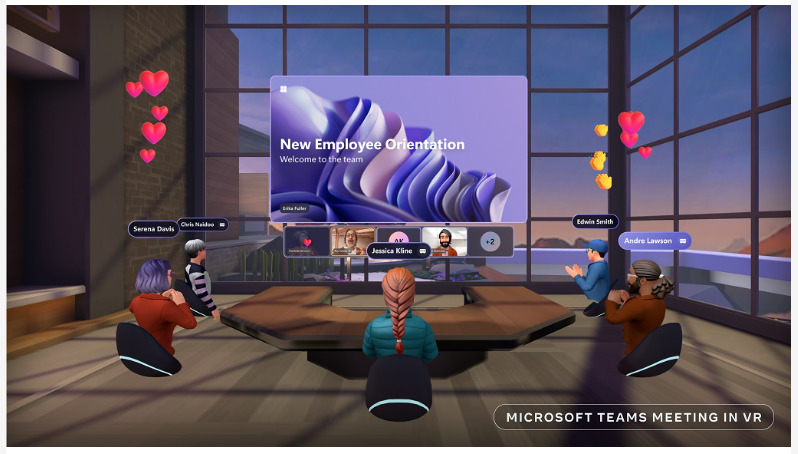
Are we there yet? Not quite. But the metaverse is picking up steam. Recently, Microsoft announced a partnership with Meta. This partnership is to bring Microsoft 365 apps into the metaverse. This means collaboration in an entirely new way. Microsoft notes that 50% of Gen Z and millennials expect to do some of their work in the metaverse in the next two years.

Microsoft Teams Meeting in VR
Image source: Microsoft

How Does the Metaverse Impact Your Company?

With companies like Microsoft looking at the future of AR/VR, it could be a reality soon. You can expect the metaverse to touch your own company in some way in the next few years. Here’s a preview of what it may impact.

Where to Advertise

When the internet was first introduced, companies didn’t immediately realize its potential. Now, most companies wouldn’t consider operating without a website. It’s a necessity for driving leads and converting sales.

If the metaverse takes off as a new 3D iteration of the internet, it could be just as important. This means exploring metaverse-type advertising in virtual worlds. Also, potentially creating your own VR site or showroom.

How to Service Customers

As the popularity of social media took off, companies realized customers used it to reach out. Seventy-nine percent of consumers expect companies to respond to a social media message. And they expect that response within a day.

To address that need, many businesses have a social media presence. They use this for marketing and to answer questions and inquiries from customers.

The metaverse may be the next step. If people begin hanging out there, they will expect to interact with businesses in that space. Just like they do now with social networks.

This means companies need to be aware of how customers may be using the metaverse as it grows. Adding a question about metaverse use to a year-end customer survey could be a way to be proactive on this topic.

Employee Training

One of the touted benefits of the metaverse is its ability to enable more immersive training. This could greatly increase training capabilities for everyone from doctors to forklift operators.

Imagine being able to replicate a task more closely in a virtual world. A person could safely make mistakes there. Then they could grow proficient before doing that thing in real life.

Start thinking about the types of training that your employees need. Then, look at ways that a VR world may make the training safer or more efficient. The metaverse may not have what you’re looking for now. But with the pace of technological advancement, it could in a year or two.

More Immersive Remote Team Collaboration

Virtual meetings skyrocketed out of necessity during the pandemic. Now, meeting by Teams or Zoom is commonplace. The next generation of online team meetings may end up being in a virtual world.

As we noted earlier, Microsoft is already working on bringing its apps into a virtual space. Add a few avatars and an immersive setting. Suddenly, you have a completely different meeting experience.

What’s one more way to enhance remote team collaboration in the metaverse? It has to do with building design and maintenance. Imagine being able to walk through a 3D recreation of a space before it’s built. Then fine-tuning the construction while inside that space.

Is Your Business Ready for the Next Digital Transformation?

What are your digital transformation plans for the next 12 months? The next three years? If you’re not sure where to begin, we can help. Contact us today to schedule a technology brainstorming session.


—
Featured Image Credit

This Article has been Republished with Permission from The Technology Press.

Filed Under: Business, New Technology

Reviews

High Performance Computer place picture
High Performance Computer
4.5
Based on 26 reviews
powered by Google
review us on
Mary Ann Travis profile picture
Mary Ann Travis
19:18 13 Mar 21
Local and honest
Curtis Bradley profile picture
Curtis Bradley
14:27 13 May 20
Nathan & Joe solved our computer related problem quickly and we were able to submit our application to PNC Bank for the Payroll Protection Program.
CJ profile picture
CJ
16:58 11 Oct 19
I have used HPC's services several times, always with the same result ………………… they fix my problem in a timely manner at a reasonable cost. They are also extremely friendly, and even stayed after closing a few minutes in order for me to get there and pick up my computer.
Great place to do business !!!
paula fletcher profile picture
paula fletcher
19:22 02 Oct 19
The staff at High Performance Computer Services has taken of the IT issues in our office for many years. They are friendly, competent, helpful, and knowledgeable. I have never had to wait for a problem to be addressed. Nathan and his staff are available when I call and diligent in resolving issues. I highly recommend them!
Richard Miranda profile picture
Richard Miranda
16:07 10 Sep 19
Needed help with my Computer and they took care of my problem. Great to work with.
Harry Wiley profile picture
Harry Wiley
23:38 03 Sep 19
Quick, excellent service! The company's representative who came to our home to fix our problem was professional, courteous and an excellent representative of the company.
Jay Kemm profile picture
Jay Kemm
23:03 16 Jun 19
They checked a computer I had and told me the problem. Fair price. Not shady. Will use again if I have issues.
More reviews

Contact Info

Toll Free – 844.300.9990
Ashland, KY – 606.325.9990
Ironton, OH – 740.414.4419
Huntington, WV – 304.521.1579
Fax – 606.393.6114

Business Hours:
9am-5pm Monday through Friday
Closed Holidays

824 Greenup Ave.
PO Box 2112
Ashland, KY 41101
support@HighPCS.com

Call Us
Toll Free – 844.300.9990

Ashland, KY – 606.325.9990

Ironton, OH – 740.414.4419

Huntington, WV – 304.521.1579

Fax – 606.393.6114

Business Hours

Phone Support – 8am-5pm Monday through Friday 
Shop Hours – 9am-5pm Monday through Friday 

* Closed for Company Meeting
Wednesday Afternoon 12-1 – Please Call *
 
Emergency Services Available
support@HighPCS.com


Directions

824 Greenup Ave.
PO Box 2112
Ashland, KY 41101

NinjaCopyright © 2026 · Agency Pro Theme on Genesis Framework · WordPress · Log in